
Pool Fence
Core Drill vs Base Plate Spigots for Glass Pool Fencing
A practical comparison of core drill and base plate spigots for frameless glass pool fencing, including substrate checks, installation tolerance, drainage, appearance, maintenance, and ordering considerations.
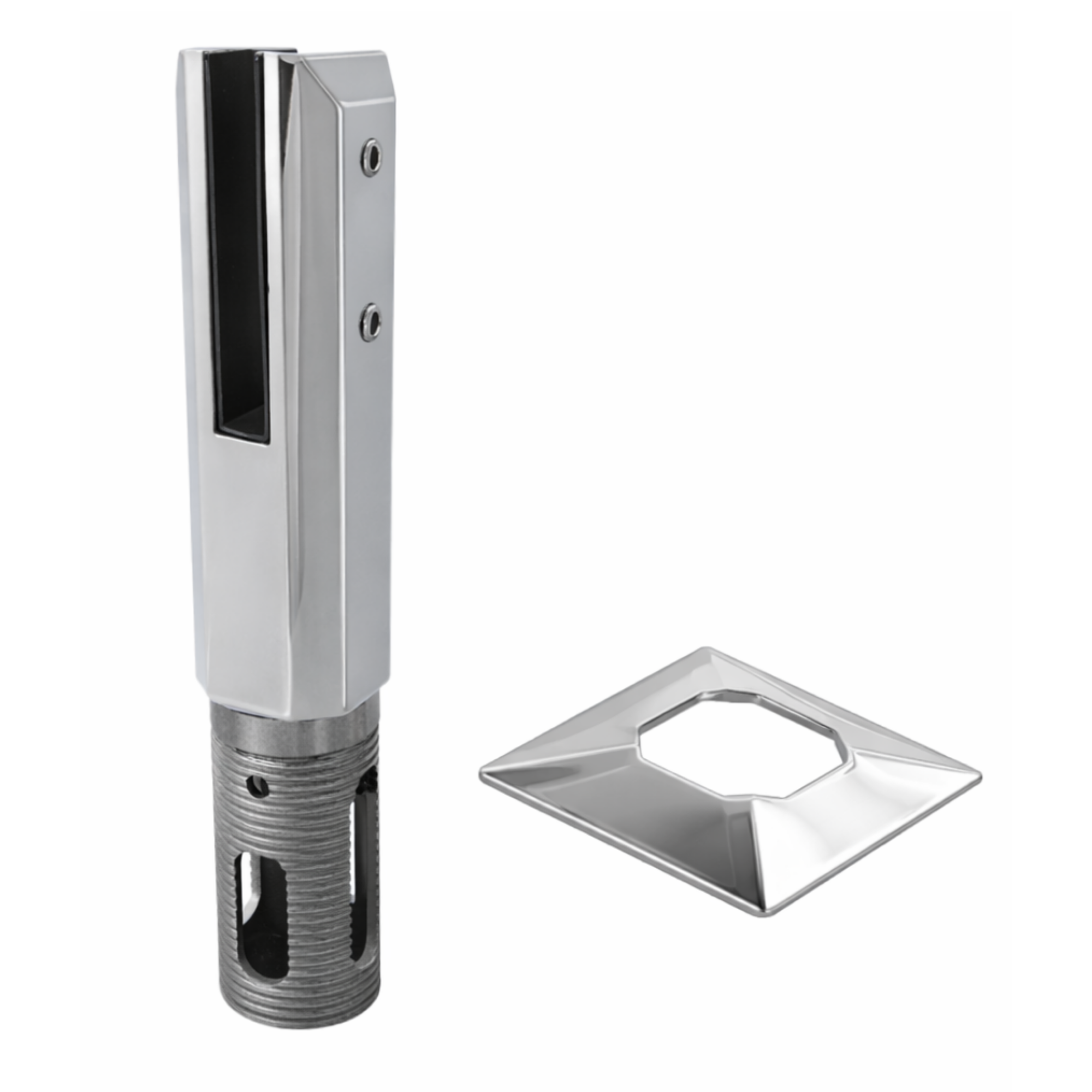
Spigots do a lot of quiet work in a frameless glass pool fence. They carry the glass, control alignment, affect the finished look, and determine how the load is transferred into the slab, tile bed, steel frame, or deck structure below. Two common options are core drill spigots and base plate spigots. They can both produce a clean glass line, but they are not interchangeable details.
The right choice depends less on personal preference and more on the site. Substrate thickness, edge distance, waterproofing, drainage, fixing access, glass height, wind exposure, gate position, and future serviceability all matter. A project can look simple on a drawing and become difficult on site if the fixing method was chosen before these conditions were checked.
This guide compares core drill and base plate spigots from a practical product and installation point of view. It focuses on frameless pool fencing, but many of the same checks also apply when matching glass panels with structural glass fixing hardware.
What Core Drill Spigots Do
A core drill spigot is set into a drilled hole in the substrate. The visible part of the hardware sits above the finished surface, while the fixing body is embedded below. For frameless pool fencing, this creates a very minimal look because there is no surface base plate around the spigot.
The main advantage is appearance. Core drill spigots keep the hardware footprint small and make the glass line feel lighter. They are often preferred where the project needs a clean architectural finish, especially around concrete pool surrounds, tiled slabs, and areas where the spigot line should not visually dominate the paving.
The trade-off is preparation. Core drilling needs enough substrate depth, suitable concrete condition, accurate set-out, and careful attention to waterproofing or drainage details. Once holes are drilled, there is less forgiveness than a surface-mounted fixing. The spigot positions must be right, and the hole condition needs to suit the fixing method.
What Base Plate Spigots Do
A base plate spigot is fixed onto the surface with anchors through a plate. The base plate spreads the fixing across a wider visible footprint and avoids the need to core drill a deep pocket for each spigot. Depending on the product, the fixing may be exposed or covered by a dress ring or cover plate.
Base plate spigots are useful where drilling deep holes is not ideal, where the structure below is steel or concrete with limited depth, or where access and adjustment are important. They can also be faster to position when the surface is suitable and the anchor specification is clear.
The trade-off is that the plate is visible. That is not automatically a problem; a square or round plate can look clean when the hardware finish is consistent. But it is a stronger visual detail than a core drill spigot, so it should be considered as part of the finished design rather than treated as a purely technical choice.
Start With the Substrate
The substrate is usually the first decision point. A core drill spigot needs enough depth and quality around the drilled hole. Concrete condition, reinforcement location, slab thickness, tile build-up, waterproofing membrane, and distance from slab edges all need attention. If the hole is too close to an edge or the concrete is weak, the cleanest-looking option may not be the most suitable one.
Base plate spigots need a different set of checks. The anchors require adequate embedment and edge distance, and the surface needs enough strength to resist movement. If the surface is tile over concrete, the fixing should be assessed through the tile build-up, adhesive bed, and slab below, not just the visible tile.
Timber decks, steel structures, suspended slabs, and stone surfaces can all change the answer. In those cases, the fixing method should be coordinated with the builder or engineer before ordering hardware. A spigot is only as reliable as the structure it is fixed into.
Appearance and Finished Detail
Core drill spigots usually win when the goal is the most minimal hardware line. With less visible metal around each fixing point, the eye reads the fence as a continuous glass barrier. This can suit high-end pool surrounds, narrow paving zones, and projects where the glass should visually disappear.
Base plate spigots create a more defined hardware rhythm. That can still look professional, especially when the plate shape, finish, and spacing are consistent. Matte black plates can create a deliberate graphic line. Polished or satin stainless plates can tie in with other external hardware.
The key is consistency. Mixing core drill and base plate spigots in the same visible run is usually hard to make look intentional unless there is a clear transition. If a project needs both fixing methods because the substrate changes, it is worth planning where that change occurs so the finished line remains clean.
Adjustment and Installation Tolerance
Frameless glass pool fencing needs accurate alignment. Small differences in spigot position can become obvious once multiple glass panels are installed in a straight run. Core drill spigots can offer some packing and alignment adjustment depending on the product and installation method, but the drilled hole position is still the main reference.
Base plate spigots can be easier to reposition before final tightening, and some adjustable wedge styles are designed to help plumb the glass on surfaces that are not perfectly level. That can be useful where the slab has falls, tiles vary slightly, or the installer needs a controlled way to correct the glass line.
Adjustment is not a substitute for good set-out. Marking the panel run, checking gaps, confirming gate openings, and dry-checking spigot centres before drilling or anchoring will save more time than relying on hardware adjustment at the end.
Drainage, Waterproofing, and Pool Environments
Pool surrounds are exposed to water, cleaning chemicals, salt, UV, and regular foot traffic. That makes drainage and corrosion resistance important. Core drill holes should not become hidden water traps. The installation method needs to consider how water can escape or how the hole is sealed, especially on tiled or waterproofed surfaces.
Base plate spigots keep the main fixing above the surface, but water can still sit around plates, under covers, or near anchor points if the surface falls are poor. The plate area should be installed cleanly, with suitable fixings and attention to long-term maintenance.
Hardware material matters in both systems. Duplex stainless steel is commonly used for demanding exterior glass fixing applications because pool environments are harder on metal than many indoor applications. Finish selection should consider both appearance and exposure.
Gate Zones Need Extra Care
A fixed glass run and a gate zone are not the same load case. The gate area introduces movement, repeated use, self-closing hardware, latch alignment, and extra force around the hinge side. The spigot choice around a gate should be checked together with the gate panel, hinge panel, hinges, latch, and clearances.
Where a gate hinges from glass, the adjacent hinge panel and its fixings must be selected carefully. Where a gate hinges from a post or wall, the load path changes again. The spigots supporting nearby panels still matter because the finished gate line needs to remain stable and aligned.
This is why pool fence glass and pool gate hardware should be planned as one system. A clean panel layout can still create problems if the gate hardware, hinge panel, and fixing method are selected separately.
Ordering Checks Before Choosing a Spigot
Before ordering, confirm the panel type, glass thickness, panel height, hardware finish, fixing method, substrate, edge distance, and any slope or fall across the run. For core drill spigots, confirm hole depth and drilling access. For base plate spigots, confirm anchor type, plate footprint, and whether the surface can accept the fixing loads.
It is also worth confirming whether the project uses standard pool fence fixed panels, gate panels, hinge panels, raked panels, or custom glass. Standard panels can make the order faster and more predictable, but the spigot layout still needs to match the actual panel split and gate opening.
A simple set-out drawing is usually enough to start: show each run, panel widths, gate position, hinge side, latch side, corners, substrate notes, and preferred hardware finish. Photos of the slab, tiles, deck, wall returns, and pool edge help identify issues before hardware is sent to site.
Which One Should You Choose?
Choose core drill spigots when the substrate is suitable, the project wants a minimal hardware footprint, and the set-out can be controlled accurately. They are a strong option for clean concrete and tile pool surrounds where the below-surface fixing detail can be prepared properly.
Choose base plate spigots when surface fixing is more practical, when drilling depth is limited, when adjustment is useful, or when the structure below suits anchors better than core holes. They are also worth considering when future serviceability and accessible fixings are important.
Neither option is automatically better. The best result comes from matching the spigot type to the glass panel layout, substrate, gate zone, finish, and installation method. For frameless pool fencing, that system thinking matters more than choosing hardware from appearance alone.
Frequently Asked Questions
Are core drill spigots stronger than base plate spigots?
Not automatically. Strength depends on the spigot design, glass thickness, substrate, fixing depth, anchor method, edge distance, and installation quality. The correct fixing method should be selected around the site conditions.
When should base plate spigots be used for pool fencing?
Base plate spigots can be useful where surface fixing is more practical than core drilling, where adjustment is needed, or where the structure is better suited to anchors. The substrate and anchor specification still need to be checked.
Do core drill spigots need drainage consideration?
Yes. Core drilled holes should not be treated as simple voids in the surface. Water, waterproofing, grout or chemical fixing, and long-term exposure around the pool area should all be considered.
Can the same pool fence run use both spigot types?
It can, but it should be planned carefully. Mixing fixing styles in one visible run can look inconsistent unless the transition is controlled by a corner, wall return, gate zone, or substrate change.
What should be confirmed before ordering spigots?
Confirm glass thickness, panel height, panel split, gate location, substrate type, edge distance, fixing access, finish, and whether the project needs core drill, base plate, or adjustable spigot hardware.